
There’s a moment every physician and clinician knows.If you’ve spent time in a Cath Lab, an ICU, an OR, or making high-stakes decisions under pressure, you’ve felt it. A tightening in the chest. A quiet pause at the table. A sense that something isn’t right, even when the vitals look stable and the protocol says proceed.
And too often, we override it.
In modern medicine, clinical intuition is rarely named, rarely taught, and often dismissed. Training rewards certainty, speed, and control. But intuition quietly informs some of the most consequential decisions we make as physicians and clinicians. Ignoring it doesn’t just cost alignment. It can cost safety, creativity, and connection to the patient in front of us.
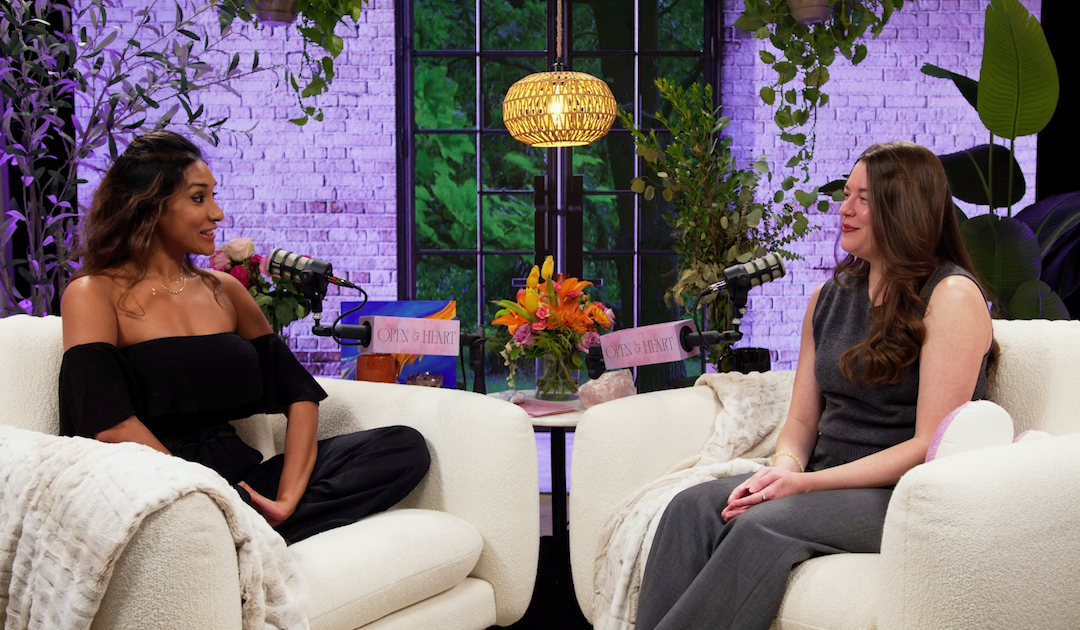
In this conversation, I sit down with Samantha Propper, a cath lab technologist turned award-winning educator and entrepreneur, and one of the earliest supporters of Open Heart. Sam’s path didn’t follow a straight line, and that’s the point. From years at the cath lab table to the classroom to founding Don’t Miss a Beat, her work has shaped how cardiac teams are trained, how they communicate, and how they advocate for patients.
What unfolds here is not a rejection of science. It is an expansion of it. Together, we explore what intuition actually feels like in the body, and why discomfort, not confidence, is often the first signal that something meaningful is emerging. Sam shares how ignoring her inner knowing led to moral injury, burnout, and misalignment, and how listening to it transformed not only her career, but her capacity to serve patients and trainees. We also talk candidly about hierarchy in medicine. How fear, ego, and silence can shut down voices at the table, even when those voices carry critical insight. As a cardiologist, I reflect on how the best outcomes I’ve witnessed were never solo efforts. They came from teams where curiosity was welcomed, feedback was safe, and intuition was trusted alongside evidence.
This conversation moves between the deeply practical and the quietly profound:
• How clinical intuition develops through lived experience, not textbooks
• Why creativity outside medicine strengthens judgment inside it
• The link between physician burnout, moral injury, and ignored inner signals
• How psychologically safe learning environments produce better clinicians
• What heart-mind connection actually looks like in real patient care
At its core, this is a reminder for those of us practicing medicine today. Healing is not purely mechanical. It is relational. It is embodied. And it requires us to listen, to our patients, our teams, and ourselves.If you are a physician, cardiologist, nurse, technologist, or clinician who has ever felt that quiet inner pull during patient care and wondered whether it belonged in medicine at all, this conversation is for you.